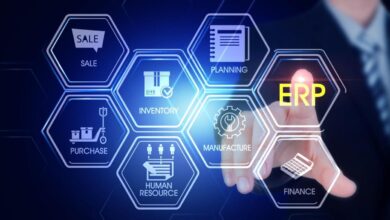
Switching ERP systems isn’t just a tech upgrade—it’s a business transformation. With the right ERP migration services, companies can unlock efficiency, scalability, and data clarity. Let’s explore how to make the shift smooth, strategic, and successful.
[ez-toc]






What Are ERP Migration Services?

ERP migration services refer to the professional support and technical expertise required to move a company’s data, processes, and operations from an existing ERP (Enterprise Resource Planning) system to a new platform. This process is far more complex than a simple data transfer—it involves strategic planning, system integration, data cleansing, user training, and post-migration support.
Defining ERP Migration in Modern Business
In today’s fast-evolving digital landscape, businesses must adapt quickly. Legacy ERP systems often lack the agility, integration capabilities, and user experience needed to compete. ERP migration services bridge the gap by enabling organizations to transition to modern platforms like SAP S/4HANA, Oracle Cloud, Microsoft Dynamics 365, or NetSuite.
- ERP migration is not just about technology—it’s about transforming business processes.
- It often aligns with digital transformation goals.
- Professional services ensure minimal downtime and maximum ROI.
Why Companies Need Professional ERP Migration Services
Attempting an ERP migration without expert guidance can lead to data loss, operational disruption, and budget overruns. According to a Gartner report, over 70% of ERP implementations face delays or cost overruns when proper planning is absent.
“ERP migration is one of the most complex IT initiatives a company can undertake. Success depends on people, process, and technology alignment.” — Gartner Research
Professional ERP migration services provide the roadmap, tools, and experience to avoid common pitfalls and ensure a smooth transition.
7 Key Steps in ERP Migration Services
A successful ERP migration isn’t accidental—it follows a structured, phased approach. Here are the seven essential steps that top-tier ERP migration services follow to ensure a seamless transition.
1. Assessment and Discovery
Before any data moves, a thorough assessment of the current ERP environment is critical. This phase involves:
- Mapping existing business processes and workflows
- Identifying pain points in the legacy system
- Evaluating data quality and volume
- Determining integration requirements with other systems (CRM, HR, supply chain)
This step sets the foundation for the entire migration. Companies often work with consultants to conduct a gap analysis between their current system and the target ERP platform.
2. Strategy and Planning
Once the assessment is complete, the next phase is developing a comprehensive migration strategy. This includes:
- Selecting the right ERP platform based on business needs
- Defining project scope, timeline, and budget
- Establishing key performance indicators (KPIs) for success
- Creating a risk management plan
During this phase, stakeholders from IT, finance, operations, and HR collaborate to ensure alignment. A well-documented plan reduces uncertainty and keeps the project on track.
3. Data Cleansing and Preparation
Data is the lifeblood of any ERP system. However, legacy systems often contain redundant, outdated, or inaccurate data. ERP migration services prioritize data cleansing to ensure only high-quality, relevant data is transferred.
- Removing duplicate records
- Standardizing data formats (e.g., date, currency, naming conventions)
- Validating master data (customers, vendors, products)
- Archiving historical data not needed in the new system
Tools like SAP Information Steward or Informatica are often used to automate and validate the cleansing process.
4. System Configuration and Customization
No two businesses are alike, so ERP systems must be configured to match specific operational needs. This phase involves:
- Setting up organizational structures (companies, plants, cost centers)
- Configuring modules (finance, inventory, procurement, etc.)
- Customizing workflows and approval processes
- Integrating with third-party applications via APIs
ERP migration services ensure that customizations are future-proof and don’t hinder system upgrades or cloud compatibility.
5. Data Migration and Validation
This is the core of ERP migration services—transferring data from the old system to the new one. The process typically follows a three-step approach:
- Extract: Pull data from the source system
- Transform: Clean, map, and format data for the target system
- Load: Import data into the new ERP platform
After migration, data validation is performed to ensure accuracy. Test scripts are run to verify that financial balances, inventory levels, and customer records match pre-migration snapshots.
6. Testing and Quality Assurance
Before going live, extensive testing is conducted to identify and fix issues. ERP migration services employ multiple testing phases:
- Unit testing: Individual modules are tested in isolation
- Integration testing: Ensures modules work together seamlessly
- User acceptance testing (UAT): End-users validate that the system meets business needs
- Performance testing: Checks system speed and scalability under load
Any bugs or discrepancies are logged and resolved before the go-live date.
7. Go-Live and Post-Migration Support
The go-live phase is when the new ERP system becomes operational. This is a high-pressure moment that requires careful coordination.
- Final data cutover is executed
- Users are transitioned to the new system
- Support teams are on standby for immediate issue resolution
Post-migration support is crucial. ERP migration services often include a stabilization period (typically 30–90 days) where consultants monitor system performance, address user concerns, and fine-tune configurations.
Top Challenges in ERP Migration Services
Despite best efforts, ERP migrations can face significant hurdles. Understanding these challenges helps organizations prepare and mitigate risks.
Data Integrity and Quality Issues
Poor data quality is one of the leading causes of ERP migration failure. Incomplete customer records, inconsistent product codes, or mismatched financial data can derail the entire process.
- Legacy systems often lack data governance
- Data may be stored in multiple formats or silos
- Manual entry errors accumulate over time
Solution: Invest in data profiling and cleansing early in the migration lifecycle.
User Resistance and Change Management
Employees accustomed to the old system may resist the new interface or workflows. This can lead to low adoption rates and productivity drops.
- Lack of training increases frustration
- Perceived complexity discourages use
- Change fatigue sets in after prolonged projects
Solution: ERP migration services should include a robust change management strategy, including communication plans, training programs, and super-user networks.
Integration with Existing Systems
Most businesses rely on multiple software systems—CRM, HRIS, e-commerce platforms, etc. Ensuring the new ERP integrates smoothly with these tools is critical.
- Legacy APIs may not be compatible
- Real-time data sync is often required
- Security and compliance must be maintained
Solution: Use middleware platforms like MuleSoft or Dell Boomi to facilitate secure, scalable integrations.
Benefits of Professional ERP Migration Services
While ERP migration is complex, the long-term benefits far outweigh the short-term challenges—especially when supported by expert services.
Improved Operational Efficiency
Modern ERP systems automate repetitive tasks, streamline workflows, and provide real-time visibility across departments. For example, automated purchase order processing reduces manual errors and speeds up procurement cycles.
- Reduced manual data entry
- Faster month-end closing
- Improved inventory turnover
Enhanced Data Accuracy and Reporting
A clean, centralized database eliminates data silos and ensures consistency. Decision-makers gain access to accurate, real-time reports and dashboards.
- Single source of truth for financial and operational data
- Advanced analytics and forecasting capabilities
- Compliance with regulatory standards (e.g., GAAP, IFRS)
Scalability and Future-Proofing
Cloud-based ERP platforms offer scalability that legacy systems can’t match. As businesses grow, they can easily add users, modules, or locations without major infrastructure investments.
- Support for global expansion
- Automatic software updates
- AI and machine learning capabilities built-in
Choosing the Right ERP Migration Services Provider
Not all ERP migration services are created equal. Selecting the right partner can make or break your project.
Key Criteria for Selection
When evaluating providers, consider the following factors:
- Industry Expertise: Do they have experience in your sector (manufacturing, retail, healthcare, etc.)?
- Proven Methodology: Do they follow a structured, repeatable migration process?
- Technical Certifications: Are their consultants certified in the ERP platform you’re adopting?
- Customer References: Can they provide case studies or client testimonials?
- Support Model: Do they offer post-go-live support and training?
Top ERP Migration Service Providers in 2024
Several firms stand out in the ERP migration space:
- Accenture: Known for large-scale SAP and Oracle migrations with global reach.
- Deloitte: Offers end-to-end ERP transformation services with strong change management support.
- IBM: Specializes in AI-driven ERP migrations and hybrid cloud integrations.
- Wipro: Provides cost-effective migration solutions for mid-sized enterprises.
- Insight Enterprises: Focuses on Microsoft Dynamics 365 migrations with a strong U.S. presence.
Visit Accenture’s SAP services page to learn more about enterprise ERP migration.
ERP Migration Services for Cloud vs. On-Premise
The choice between cloud and on-premise ERP systems significantly impacts the migration approach.
Cloud ERP Migration Benefits
Migrating to a cloud-based ERP system (e.g., Oracle Cloud ERP, SAP S/4HANA Cloud) offers several advantages:
- Lower upfront costs (no hardware investment)
- Faster deployment timelines
- Automatic updates and security patches
- Remote access and mobile capabilities
However, data security and internet dependency are common concerns.
On-Premise ERP Migration Considerations
Some organizations prefer on-premise solutions for greater control and customization. While this offers more data sovereignty, it requires:
- Significant IT infrastructure investment
- In-house maintenance and upgrade management
- Longer migration timelines due to hardware setup
ERP migration services for on-premise deployments often involve deeper technical customization and longer project durations.
Cost of ERP Migration Services
Understanding the financial investment is crucial for budget planning. Costs vary widely based on company size, system complexity, and migration scope.
Factors Influencing Migration Costs
Several elements determine the total cost of ERP migration services:
- Company Size: Small businesses may spend $50,000–$150,000, while large enterprises can exceed $1 million.
- ERP Platform: SAP migrations are typically more expensive than NetSuite or Acumatica.
- Data Volume: Larger datasets require more cleansing and validation effort.
- Customization Needs: Highly customized systems increase development and testing time.
- Consultant Rates: Top-tier firms charge $150–$300/hour for senior consultants.
Hidden Costs to Watch For
Many organizations underestimate the following expenses:
- Training and change management programs
- Post-migration support and troubleshooting
- Integration with third-party applications
- Hardware upgrades (for on-premise)
- Downtime during go-live
A detailed cost-benefit analysis should be part of the initial planning phase.
Future Trends in ERP Migration Services
The ERP landscape is evolving rapidly, driven by AI, automation, and cloud innovation.
AI-Powered Migration Tools
Artificial intelligence is transforming ERP migration services by automating repetitive tasks like data mapping and anomaly detection. AI can analyze legacy system logs to recommend optimal data structures for the new ERP.
- Reduces manual effort by up to 40%
- Improves data accuracy through pattern recognition
- Speeds up testing with intelligent test case generation
Hybrid and Multi-Cloud ERP Strategies
More companies are adopting hybrid models—running some modules on-premise and others in the cloud. ERP migration services now include cloud orchestration and data synchronization across environments.
- Offers flexibility and risk mitigation
- Supports gradual migration strategies
- Enables best-of-breed system integration
Increased Focus on User Experience
Modern ERP systems prioritize intuitive interfaces and mobile access. Migration services now include UX design workshops to ensure the new system is user-friendly from day one.
- Reduces training time
- Increases user adoption
- Improves productivity
What are ERP migration services?
ERP migration services are professional solutions that help organizations move their data, processes, and operations from an old ERP system to a new one. These services include assessment, planning, data cleansing, system configuration, migration, testing, and post-go-live support to ensure a smooth transition with minimal disruption.
How long does an ERP migration take?
The duration varies based on complexity. Small businesses may complete migration in 3–6 months, while large enterprises can take 12–24 months. Factors like data volume, customization, and integration needs influence the timeline.
Is cloud ERP migration safer than on-premise?
Cloud ERP migration offers robust security features like encryption, multi-factor authentication, and regular audits. However, data sovereignty and internet dependency are considerations. On-premise offers more control but requires in-house security management. The choice depends on business priorities.
Can ERP migration cause data loss?
Poorly managed migrations can lead to data loss. However, professional ERP migration services use rigorous data validation, backup protocols, and rollback plans to prevent this. Data integrity is a top priority throughout the process.
Do I need training after ERP migration?
Yes, training is essential. Even intuitive systems require user orientation. ERP migration services typically include comprehensive training programs to ensure employees can use the new system effectively and confidently.
ERP migration services are a strategic necessity for businesses aiming to modernize operations, improve data integrity, and scale efficiently. From initial assessment to post-go-live support, a structured approach ensures success. While challenges like data quality and user adoption exist, the benefits—enhanced efficiency, real-time insights, and future readiness—make the journey worthwhile. By choosing the right partner and following best practices, organizations can turn ERP migration from a daunting task into a powerful competitive advantage.
Further Reading: